
The Momo’s Migration:
A Tibetan Tale of Resilience
Curated & Designed by Sardine Mother Studio.
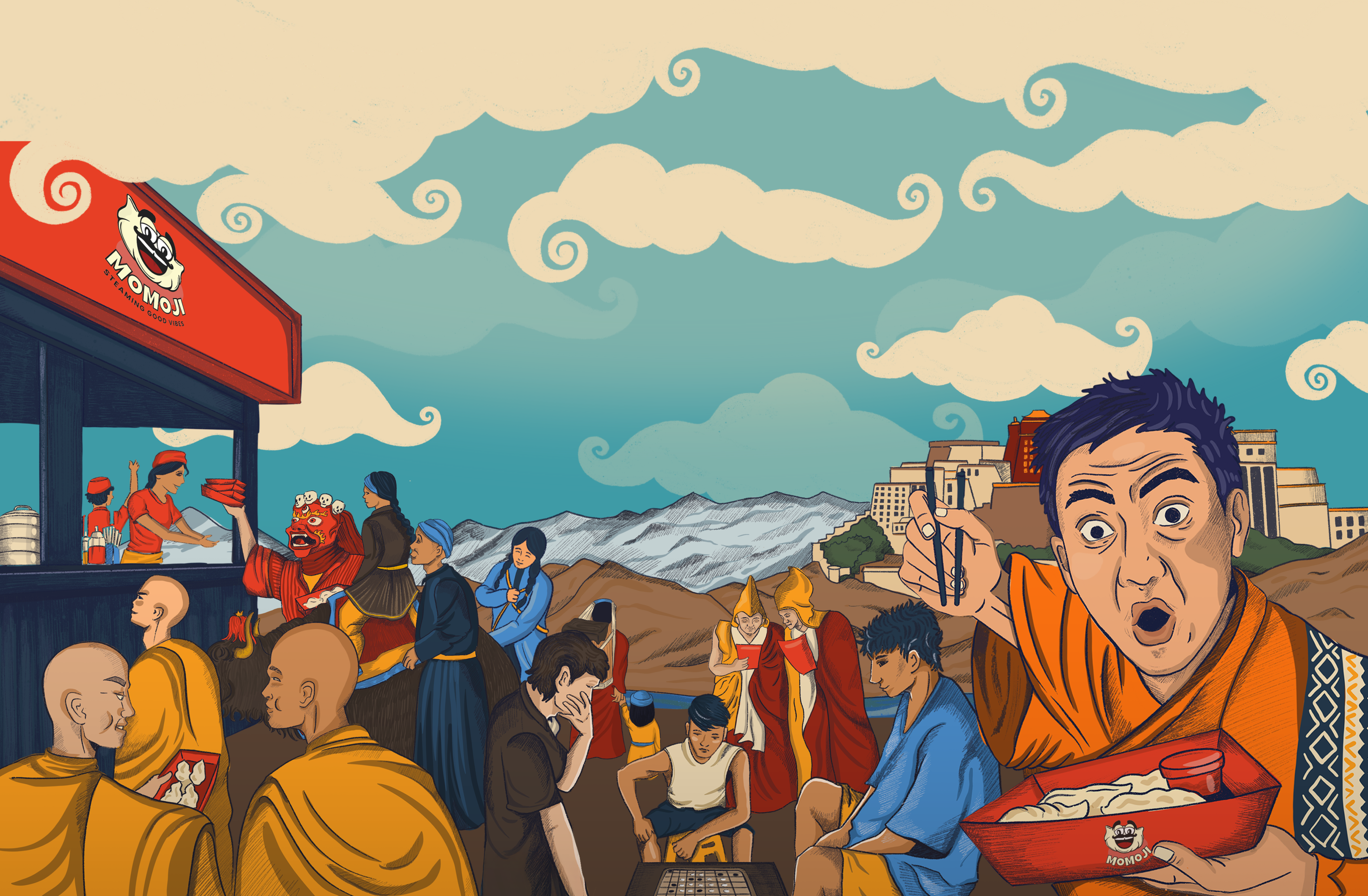
In the steam rising from a bamboo basket of momos, there's more than just warmth. There’s memory. What we know today as one of India’s favourite street snacks is actually part of a much deeper story. A quiet symbol of the Tibetan diaspora.
When the Dalai Lama fled Tibet in 1959, thousands of Tibetans followed, seeking refuge in India. They didn’t just bring a few belongings. They brought their language, faith, music, and food. Among the most cherished was the momo. Soft dumplings filled with yak meat or vegetables, usually served with a fiery red chilli sauce. In a new land where everything felt unfamiliar, momos offered comfort and a way to hold on to home.
As time passed, Tibetan families settled into Indian life. And slowly, so did the momo. It changed and adapted. Yak was replaced with chicken, paneer, and vegetables. Steamed, fried, even tandoori versions started popping up across the country. What began as a quiet remembrance became a dish loved by millions.
Today, momos are everywhere. On the streets of Delhi, in the hills of Darjeeling, and in the night markets of Bangalore. Most people may not know where they came from, but every bite still carries a part of that story.
Because momos aren’t just food. They are reminders of resilience. Of how traditions live on through taste. They tell the story of a people who lost their land but never their spirit. And how something as simple as a dumpling can carry history, memory, and belonging.
The Momo’s Migration:
A Tibetan Tale of Resilience
Curated & Designed by Sardine Mother Studio.
In the steam rising from a bamboo basket of momos, there's more than just warmth. There’s memory. What we know today as one of India’s favourite street snacks is actually part of a much deeper story. A quiet symbol of the Tibetan diaspora.
When the Dalai Lama fled Tibet in 1959, thousands of Tibetans followed, seeking refuge in India. They didn’t just bring a few belongings. They brought their language, faith, music, and food. Among the most cherished was the momo. Soft dumplings filled with yak meat or vegetables, usually served with a fiery red chilli sauce. In a new land where everything felt unfamiliar, momos offered comfort and a way to hold on to home.
As time passed, Tibetan families settled into Indian life. And slowly, so did the momo. It changed and adapted. Yak was replaced with chicken, paneer, and vegetables. Steamed, fried, even tandoori versions started popping up across the country. What began as a quiet remembrance became a dish loved by millions.
Today, momos are everywhere. On the streets of Delhi, in the hills of Darjeeling, and in the night markets of Bangalore. Most people may not know where they came from, but every bite still carries a part of that story.
Because momos aren’t just food. They are reminders of resilience. Of how traditions live on through taste. They tell the story of a people who lost their land but never their spirit. And how something as simple as a dumpling can carry history, memory, and belonging.
The Momo’s Migration:
A Tibetan Tale of Resilience
Curated & Designed by Sardine Mother Studio.
In the steam rising from a bamboo basket of momos, there's more than just warmth. There’s memory. What we know today as one of India’s favourite street snacks is actually part of a much deeper story. A quiet symbol of the Tibetan diaspora.
When the Dalai Lama fled Tibet in 1959, thousands of Tibetans followed, seeking refuge in India. They didn’t just bring a few belongings. They brought their language, faith, music, and food. Among the most cherished was the momo. Soft dumplings filled with yak meat or vegetables, usually served with a fiery red chilli sauce. In a new land where everything felt unfamiliar, momos offered comfort and a way to hold on to home.
As time passed, Tibetan families settled into Indian life. And slowly, so did the momo. It changed and adapted. Yak was replaced with chicken, paneer, and vegetables. Steamed, fried, even tandoori versions started popping up across the country. What began as a quiet remembrance became a dish loved by millions.
Today, momos are everywhere. On the streets of Delhi, in the hills of Darjeeling, and in the night markets of Bangalore. Most people may not know where they came from, but every bite still carries a part of that story.
Because momos aren’t just food. They are reminders of resilience. Of how traditions live on through taste. They tell the story of a people who lost their land but never their spirit. And how something as simple as a dumpling can carry history, memory, and belonging.